
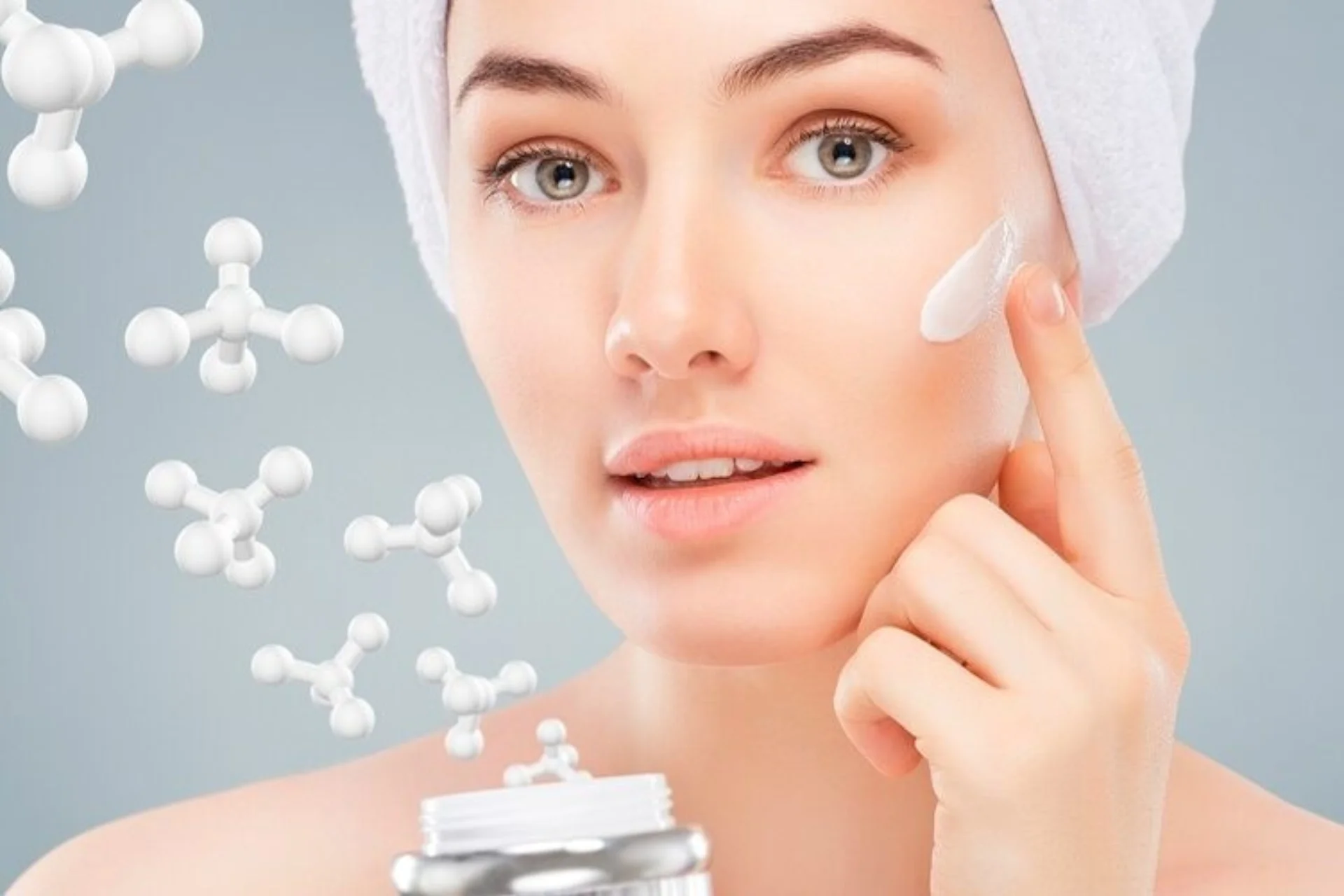
Peptides for skin have become one of the most talked-about ingredients in modern skincare, with everyone mentioning them. From anti-aging serums and moisturizers to eye creams and little overnight treatments, peptides are showing up in so many skin care products now. But what are peptides exactly, how do they work, and are they actually good for your skin, not just marketing hype?
Peptides are small chains of amino acids that play important roles in the skin’s structure and day-to-day function. That’s why they can often fit into different routines and with different skin types, even when you’re not trying to be too extreme.
In this guide that’s pretty complete, we’ll go through peptides for skin, the benefits you might notice, the different types of peptides, how to use peptide skincare products, which ingredients tend to pair well, and the most common mistakes people make.
What Are Peptides for Skin?
Peptides for skin are kind of a thing people talk about a lot, and honestly, it’s not only marketing, even if it can feel a little messy. So basically, peptides are short chains of amino acids. These amino acids act like building blocks for proteins, and proteins are, you know, part of what helps skin look healthier.
Our skin already has proteins like collagen, elastin, and keratin. They support the skin’s structure, its strength, how well it bounces back, and the overall look people notice without really thinking about it.
Now, when peptides get added into skincare products, they’re usually there to do specific skin jobs. Depending on what type of peptide it is, a formula can be aimed at making firmness seem improved, keeping hydration steady, smoothing roughness, or easing the look of visible aging signs that are visible.

That’s probably why peptides pop up in all sorts of stuff, like peptide serums, anti-aging creams, moisturizers, eye creams, neck creams, overnight masks, facial treatments, and barrier-supporting skincare.
But also, not all peptides behave the same way. Different peptide families have different roles, so it really comes down to how the whole product is put together, not just the ingredient name.
How Do Peptides Actually Work on the Skin?
One reason peptides feel so interesting in skincare is that they can interact with skin cells and the kind of biological processes that are already going on. Not in some magic way, more like a subtle cue.
Some cosmetic peptides are made to behave as signaling peptides. They can send tiny signals connected with processes that help keep the skin’s extracellular matrix in good condition. And that matters because the extracellular matrix is kind of like the skin’s supportive framework, you know, the network around cells.
Then there are other peptides, with different cosmetic roles. For example, some are used for skin conditioning, others may help improve how hydrated the skin looks, and some are built to help the formula and the skin resist certain environmental stressors. So sometimes the benefit is about appearance, sometimes it’s about comfort, and sometimes it’s about protection.
What you get in practice depends on:
- the particular peptide
- its concentration, and also how it’s set in the product
- the formulation overall
- how stable the ingredient is, especially over time
- how the product is delivered to skin (like leave-on vs rinse-off)
- how often you use it
- and your individual skin characteristics
So, in the end, it’s more accurate to think of peptides as supportive skincare ingredients, rather than expecting one peptide product to completely transform your skin overnight.
Benefits of Peptides for Skin
Peptides are pretty popular in skincare because they can help with a bunch of usual concerns. In general, peptide-based products are talked about for their possible effects on different parts of skin appearance. Here are some of the potential benefits you might see people mention.

1. Helps Support Skin That Looks Firmer
A common reason people choose peptides is to boost the look of firmness.
When skin ages, the structure sort of shifts over time. It can start to look less tight and less elastic too.
Some peptide formulas are made to support processes tied to collagen and the extracellular matrix. If you use them consistently, peptide skincare may encourage skin to look firmer and more resilient.
That said, the outcome can really vary from person to person, and it also depends on the exact formulation.
2. May help reduce the appearance of fine lines
Fine lines are one of the most common signs of visible skin aging.
Peptide products are often composed in a way that supports a smoother-looking complexion, and sometimes that gives the impression it just “soothes” the look a bit. By boosting hydration and also helping reinforce the skin’s overall framework, peptides may make those fine lines seem less noticeable.
When skin is adequately hydrated, fine lines can look temporarily softer as well, because water tends to create a more even-looking surface. For that reason, peptides are often matched with moisturizing ingredients like
- Hyaluronic acid
- Glycerin
- Ceramides
- Panthenol
- Squalane
3. Helps to keep Skin hydrated
Some peptide products are made with moisturizing plus barrier-supporting ingredients, so it’s sort of a two-way situation.
Basically, a healthy skin barrier helps the skin hang on to water, and it also guards it from outside stressors, things like dryness in the air or friction.
When the skin gets a bit dehydrated, it may feel
- Tight
- Rough
- Flaky
- Uncomfortable
- Dull,
So if you use a peptide moisturizer or a peptide serum next to a reliable regular moisturizer, it may help you reach a more hydrated-looking complexion overall.
4. Helps Improve the Look of Skin Texture
If the skin texture is kinda uneven, it can end up looking less bright or even a bit rough.
Peptides may help the complexion look smoother when they’re in a skincare formula that makes sense for you.
For the best results, peptide products can be used together with other suitable ingredients that aim at texture, depending on how your skin tolerates them.

5. Supports the Skin Barrier
The skin barrier matters a lot for skin that looks healthy
When that barrier gets weaker, you might notice dryness, sensitivity, and more water basically escaping
Peptide skincare is often matched with barrier-supporting ingredients like ceramides, fatty acids, cholesterol, glycerin, and panthenol
A routine centered on barrier support can be especially helpful if your skin feels dry or easily irritated
6. May help skin look more plump-ish
Hydration plays a key role in how that plump skin look shows up.
Serum formulas that include peptides and also humectants can help bring up that more hydrated kinda appearance, without too much drama.
Ingredients like hyaluronic acid as well as glycerin pull in water and keep it there, so the skin can, for a while, look fuller and smoother, sort of immediately.
7. Can help improve overall skin quality
Peptides are not really a one-track ingredient, more like a supporting player that can fit into a routine.
Depending on how the formula is built, peptide skincare might work alongside other steps to improve the general look of:
- Fine lines
- Dryness,
- Dullness
- Texture
- Firmness
- Elasticity
- Dehydration
Different Types of Peptides Used in Skincare
There isn’t just one type of peptide, really. Different peptide families can show up with different structures, and also different cosmetic purposes, which is why it helps to know the main categories so you can read skincare ingredient lists a bit more effectively, even when the labels are vague.
Signal Peptides
Signal peptides are probably some of the most commonly mentioned peptides in anti-aging skincare.
They’re made to send sort of messages that may help trigger processes connected to the skin’s extracellular matrix.
You’ll often see examples like specific peptides that come from sequences linked with collagen or matrix proteins.
Signal peptides are usually added to products that are promoted for things such as
- Fine lines
- Firmness
- Elasticity
- Skin texture

Carrier Peptides
Carrier peptides are sort of made to help move along or “hold up” the presence of certain elements that show up in skin-related processes. It’s not just a vague idea; there are specific examples.
Copper peptides are a very common one. Copper tripeptide-1, which people usually shorten to GHK-Cu in beauty talk, is considered one of the more established copper peptide ingredients.
You’ll typically see these peptides inside products aimed at the look of aging, and also skin recovery, like when the skin looks calmer again.
Enzyme-Inhibitory Peptides
Then there are peptides meant to affect enzymes that participate in processes tied to how skin aging shows up over time.
They often end up in anti-aging blends that are created to help the look of wrinkles and the feel/texture of skin.
Their working style is not the same as traditional signal peptides, so it really helps to check the exact ingredient name and what it’s doing, not just the general category.
Neurotransmitter-Related Peptides
Some peptides are being sold for their supposed ability to nudge pathways tied to facial expression and the look of expression lines. In ads, they’re sometimes called “Botox-like” peptides, though, in practice, this wording can be a bit misleading, because topical peptides are not the same as injectable botulinum toxin treatments, and you shouldn’t assume their results will match.
Copper Peptides for Skin
Copper peptides have been getting a lot of attention lately in skincare circles. One ingredient that comes up often is Copper Tripeptide-1, and it’s typically used in formulas aimed at visible signs of aging, skin firmness, texture, and the overall skin appearance. You’ll frequently see them in serums, plus certain specialized treatments. Since copper peptides are active cosmetic ingredients, it’s still important to follow the product’s instructions and not build a routine that’s more complicated than it needs to be.
Peptides vs. collagen: what’s the difference?
They are connected in a kind of way but not really the same, and it can get a little confusing. Collagen is a big structural protein; it’s naturally found in skin. Peptides are the smaller chain-like parts made from amino acids, so they’re way more compact.
So when collagen is put directly on the skin surface in a cosmetic, that large molecular structure usually makes it harder for it to get in very far. Meanwhile, peptides are smaller, and they can be crafted, or more precisely designed, for beauty use cases.
That is why skincare brands often lean on peptides, instead of depending only on topical collagen.
Peptides vs retinol
So retinol and peptides are kinda both pretty famous anti-aging skincare ideas, but they work in different ways, and you notice it in real life.
Retinol is basically a vitamin A derivative; it can steer cellular processes, and it’s honestly one of the most researched topical options for visible skin aging.
Peptides, on the other hand, are usually treated like a softer, more calm cosmetic ingredient, and they’re commonly used to help with firmness, moisture support, and that overall look of skin that feels more put together.
Retinol might be the better option if you’re dealing with
- Fine lines
- Rough texture
- Acne
- Photoaging
- Uneven pigmentation
Peptides might be better if you want
- Support for skin firmness
- Hydration support
- Barrier support
- A gentle anti-aging routine
- Sensitive skin, or skin that gets easily bothered
Some people do end up using both ingredients in the same general routine, but if you add more than one active at the same time, it can get a little annoying, because irritation becomes hard to blame on one thing. And you might not figure out what caused it, even after a day or two.
Can you use peptides every day?
For a lot of folks, peptide products can be used every day, because peptides are usually seen as pretty gentle, though not always. Still, the right frequency really depends on the full formula, not just the peptide part. Like, a “peptide serum” can include extras.
For example, it might also have retinol, acids, vitamin C, and some exfoliating ingredients. It could even have fragrance or essential oils. When those are in the mix, the routine may feel less gentle than you’d expect from a straightforward peptide serum.
So, please check the product directions, especially the suggested use schedule. If you’re new to peptides, start with a simpler routine, then bring in products little by little.
Can you use peptides every day?
For a lot of folks, peptide products can be used every day, because peptides are usually seen as pretty gentle, though not always. Still, the right frequency really depends on the full formula, not just the peptide part. Like, a “peptide serum” can include extras.
For example, it might also have retinol, acids, vitamin C, and some exfoliating ingredients. It could even have fragrance or essential oils. When those are in the mix, the routine may feel less gentle than you’d expect from a straightforward peptide serum.
So, please check the product directions, especially the suggested use schedule. If you’re new to peptides, start with a simpler routine, then bring in products little by little.
When should you use peptides?
Honestly, you can weave them into either a morning or an evening skincare routine; it kinda depends on what fits your day, not so much on a strict rule.
If you want a simple morning setup, it might go like this:
- Gentle cleanser
- Peptide serum
- Moisturizer
- Sunscreen
For an evening routine, it could look more like:
- Cleanser
- Peptide serum
- Moisturizer
And the biggest deal, really, is consistency. You do not always have to run a complicated 10-step routine either, to get results from a peptide product.
Peptides in a morning skincare routine
So, if you want peptides in the daytime, yeah, you can do it, as they fit into a simple morning flow without too much fuss, and honestly no big drama or anything.
Step 1 cleanser
Start with a gentle cleanser to rinse off excess oil, sweat, and any leftover skincare residue- you know the usual kind of stuff.
Step 2 peptide serum
Then apply your peptide serum. Just follow the label; like, that’s pretty much it. You don’t have to overthink it; keep it basic- nothing too fancy.
Step 3 moisturizer
After that, add a moisturizer that matches your skin type so everything stays calm and comfortable, not feeling overly stretched or tight.
Step 4 sunscreen
Finish with broad-spectrum sunscreen.
Sunscreen is extra important too, because UV exposure is a major reason early visible skin aging shows up, you know what I mean.

Peptides in a night skincare routine
Even when it’s dark out, peptides can still be pretty useful.
A basic night routine might look something like this:
Cleanser → peptide serum → moisturizer
If you’re using retinoids or exfoliating acids, you may want to swap the order a bit, or use them on alternate nights. This part really depends on how your skin reacts with these ingredients, plus whatever the product directions say for each thing.
Can You Use Peptides With Hyaluronic Acid?
Yes, you can use peptides with hyaluronic acid, more or less. They get paired in skincare all the time really, not only because of some odd “crazy theory.” Hyaluronic acid is a humectant, so it helps draw water to the surface of your skin. Then you add peptides, plus other calming or moisturizing extras; it can be pretty useful if you’re trying to improve how skin looks, like dryness, dehydration, fine lines, dullness, and that slightly rough texture kind of vibe.
And a peptide serum that already has hyaluronic acid can feel handy too, because you’re kind of getting more than one active type in a single formula. It’s like several small tasks in one bottle; you don’t really need to stack as many steps.
—
Can you use peptides with vitamin C?
In general, peptides and vitamin C can both fit into the same overall skincare routine. But the usual “you should never use them together” talk is kind of an oversimplification, or maybe it’s just missing details. A lot of modern cosmetic formulas are built with multiple actives at once, and what tends to matter most is how the product is formulated and stays stable over time, not only the names of ingredients sitting on the label.
If you want the simplest, low-stress approach, you can just do vitamin C in the morning and peptides later at night. Example :
Morning, Cleanser → Vitamin C → Moisturizer → Sunscreen
Evening: Cleanser → Peptide Serum → Moisturizer
This way it’s pretty straightforward, without you having to overthink every little interaction.
You Use Peptides With Retinol?
Peptides and retinol can, maybe, be used together, like in the same general skincare routine, yeah. Because retinol often brings some dryness and mild irritation, peptides might help as this sort of supportive skin ally, you know, less “wow,” more comforting, in a way.
A pretty simple low-drama approach could look like this
Morning: Vitamin C → moisturizer → sunscreen
Night: retinol → moisturizer
You can also add a peptide product on the nights you skip retinol, especially if your skin feels extra touchy, or it goes red really easily. Still, the best plan depends a lot on the exact products you’re using, and how your skin is tolerating everything, honestly.
Peptides for Dry Skin
Try to look for peptide products that also include things like
- Ceramides,
- Glycerin
- Hyaluronic acid
- Squalane
- Panthenol
- Fatty acids
Also, don’t overdo exfoliation. Too many acids or harsh scrubs can push that dryness even further. In a lot of cases, keeping it basic can work better, rather than adding one more step after another, every single time.

Peptides for Oily Skin
If your skin is oily, you can still use peptides; sure, they are not automatically a problem. Just try to pick something that feels light, like a serum, a gel moisturizer, a water-based formula, or a non-greasy lotion. Peptides on their own do not really have to make skin more oily. Honestly, the full formulation, meaning how the whole product is put together, matters more than the label name alone, like way more.
Peptides for Sensitive Skin
Peptides are often seen as a pretty decent fit for sensitive skin, because they usually are not exfoliating-type ingredients. But it really depends on the complete formula. Even a peptide serum can cause issues if it has things like strong fragrance, essential oils, higher concentrations of acids, or other irritating actives. If your skin is sensitive, aim for a simpler, fragrance-free formulation when you can, and do a patch test on new products first.
Peptides for more Mature Skin
Peptide skincare is kinda popular with people who are paying attention to the visible signs of aging; you know how the skin can start looking a bit worn out over time. A routine for mature skin usually turns into a mix of hydration, a little more firmness, those fine lines, uneven tone, plus sun protection and barrier support. Peptides can fit into that whole scene, but they’re not the only thing you should lean on. Still, sunscreen is one of the biggest moves you can make, because it really helps protect against UV-related premature aging.
How long do peptides take to work?
Skincare results rarely happen overnight; it’s just the way these things usually go. The timeline depends on which peptide is used, the exact formulation and concentration, and also what skin issue you’re trying to guide into a better state. Hydration can make skin feel smoother fairly quickly, especially when a peptide serum also includes humectants. But for fine lines, firmness, and overall texture, you normally need steady use for longer stretches. Basically, give a new skincare product a few weeks of regular use before deciding if it’s working for you. Unless, of course, it starts irritating, or some kind of discomfort.
How long do peptides take to work?
In skincare, peptides usually don’t do that “instant overnight” thing. It’s more like a gradual, almost steady kind of shift, you know. The exact timing really depends on which peptide you’re using, the rest of the formula around it, the concentration, and also what specific issue you’re trying to handle with it.
Sometimes you’ll notice hydration first, as your skin looks a bit calmer and smoother pretty quickly. That can happen especially if the peptide serum also has humectants mixed in. But if your goal is actual changes in fine lines, firmness, or that surface texture overall, then you’re usually looking at consistent use for longer. Not just a few days and then done.
Can peptides help with acne?
Usually, peptides aren’t seen as a first-line treatment for acne, not really. If acne is your main thing, other ingredients like salicylic acid, benzoyl peroxide, or topical retinoids tend to be more on target, depending on what kind of acne you have and how intense it is.
That said, peptide products can still slot in within a broader routine if they feel compatible with your skin and don’t trigger irritation for you. If your skin leans acne-prone, try to pick lightweight formulas that are non-comedogenic when possible—because it helps reduce the chance of clogging.
Can peptides help with hyperpigmentation?
Peptides aren’t usually the go-to ingredients for pigmentation; they don’t aim at it in a direct way. If uneven color is what you’re most focused on, things like vitamin C, niacinamide, azelaic acid, retinoids, and certain exfoliating acids are often more directly helpful.
But the bigger deal is daily sunscreen, honestly. UV exposure can worsen dark spots and keep them hanging around longer, no joke.
Peptides can still play a supporting role, more like improving the overall look and feel of the skin as part of a broader routine, if that’s what you want to add in. An uncomfortable, kind of familiar stinging feeling.
A kinda simple peptide skincare routine
If you’re basically brand new to peptides, you don’t really need some overly complicated routine, like at all.
Morning part
1. Gentle cleanser.
Clean your face without stripping the skin.
2. Peptide serum
Put on a few drops; just follow the directions from the product.
3. Moisturizer
Pick one that matches your skin type, not something random.
4. Spectrum sunscreen
Make sunscreen the last step, for the morning.
Night part
1. Cleanser
Wash away makeup, sunscreen, and the everyday buildup; just get it off.
2. Peptide serum
Apply your peptide product, same idea as in the morning.
3. Moisturizer
Finish it up with a moisturizer to keep everything comfortably hydrated.
Honestly, this quick setup can be easier to stick with than a more complicated plan that’s packed with lots of different actives.
Can sensitive skin use peptides?
Honestly, a lot of people with sensitive skin end up doing fine with peptide products, but it depends on the whole setup, not just the peptide itself. If you can, try to grab something pretty simple, fragrance-free, and do a patch test first on a small spot, like behind your ear or on the inner part of your arm, before you fully commit, ok.
At what age should you start using peptides?
There isn’t one exact age where everyone should start peptides, because skin needs aren’t identical. Most folks begin when the product matches what they’re trying to support, like barrier comfort, plus extra hydration, or that softer look of early fine lines and first hints of aging.
Final Thoughts: Are Peptides Worth Adding to Your Skincare Routine?
Peptides for skin can be a useful extra, especially if you want that more moisturized vibe, a smoother feel, and over time a slightly more lifted, firmer-appearing look. Still, the main thing is to choose a well-made product and use it consistently, because you’re not chasing some dramatic overnight transformation.
Peptides can also pair nicely with other ingredients like hyaluronic acid, ceramides, niacinamide, antioxidant support, and the basic moisturizing essentials. Depending on what you’re targeting, you might bring them alongside retinoids or other actives too, but it’s smartest to introduce them slowly step by step, not in a rush.